Client
CGT 522
Project Type
User Experience Design
Project Year
2021
Role
UX Research, Interaction Design, Prototyping
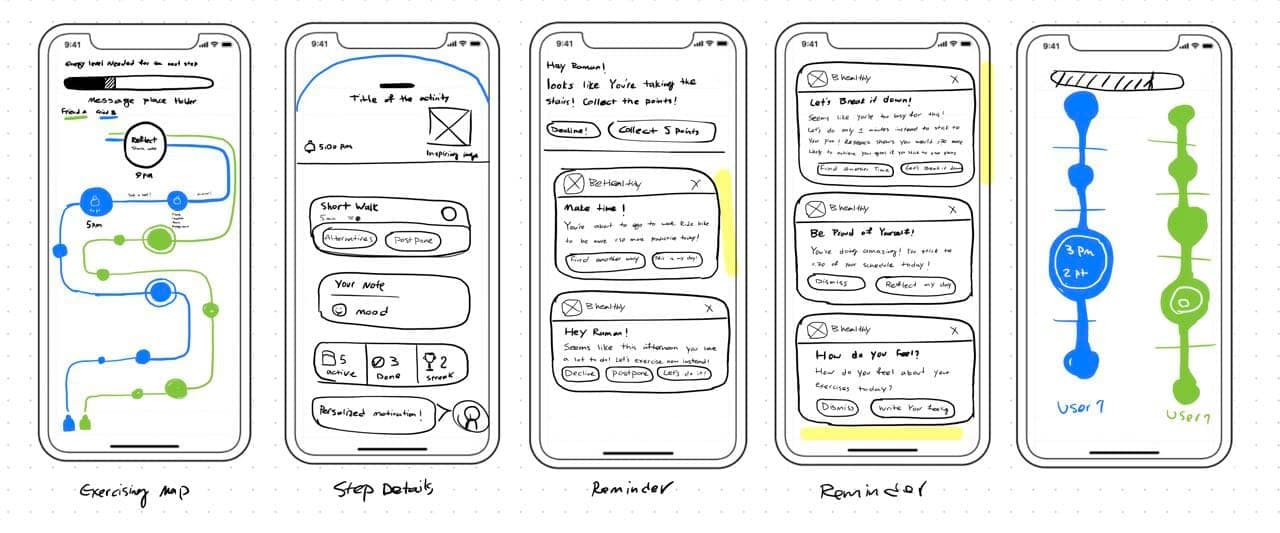
A WFT that empowers sedentary adults to be healthier by introducing easy, short-lived exercises in their everyday lives.
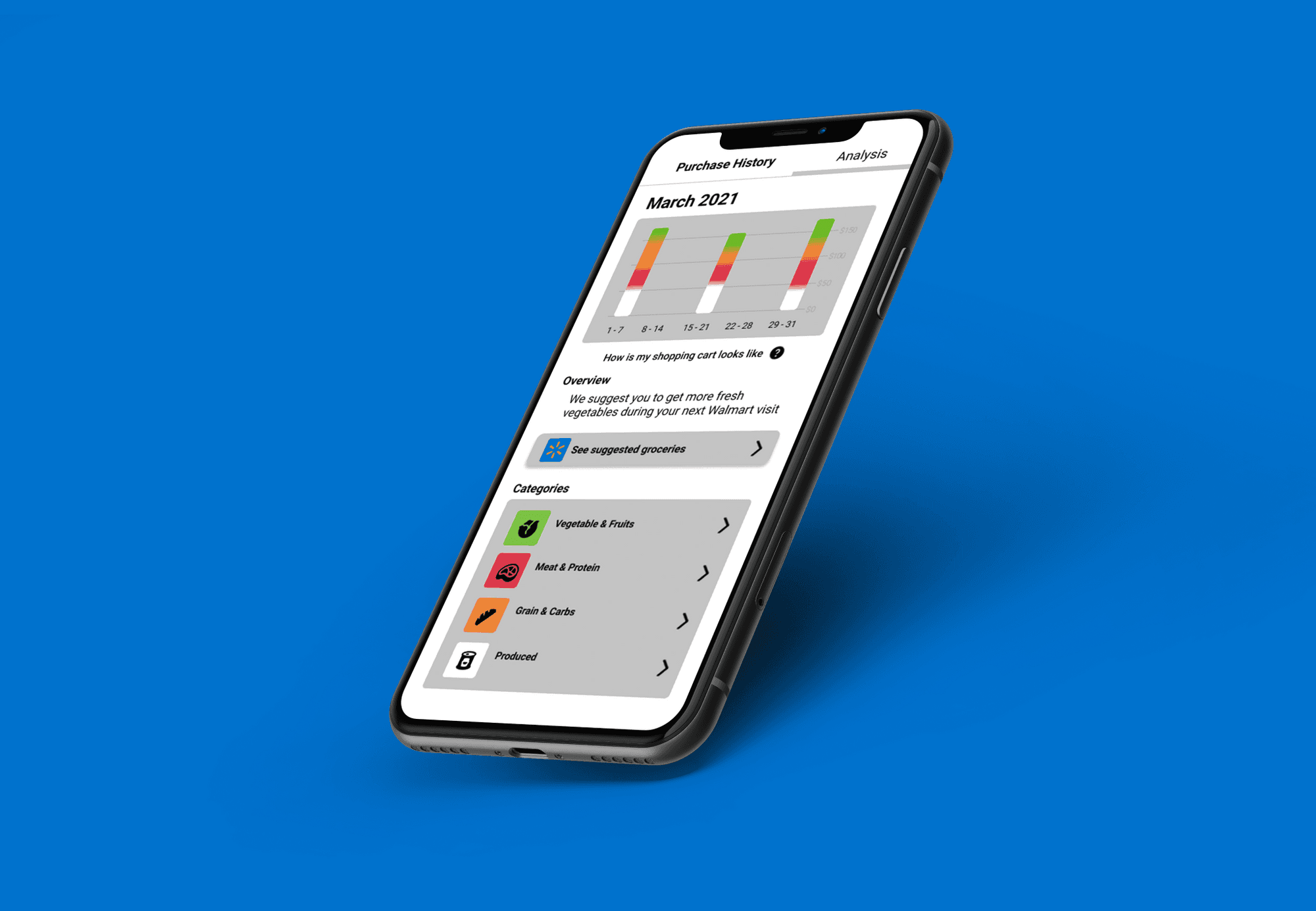
Fitness trackers, also known as fitness bands or activity trackers, are becoming increasingly popular. These devices track steps walked, calories burned, heart rate, and other health metrics while helping users build healthier routines.
Behind the Scenes
Why solve this problem?
Wearable Fitness Trackers (WFTs) have become a common tool for evaluating and encouraging healthy lifestyles. However, their success in driving sustained behavioral change is still limited.
Our research suggested that inactive individuals often struggle with knowing how, when, and where to increase their physical activity.
Research
Discovery
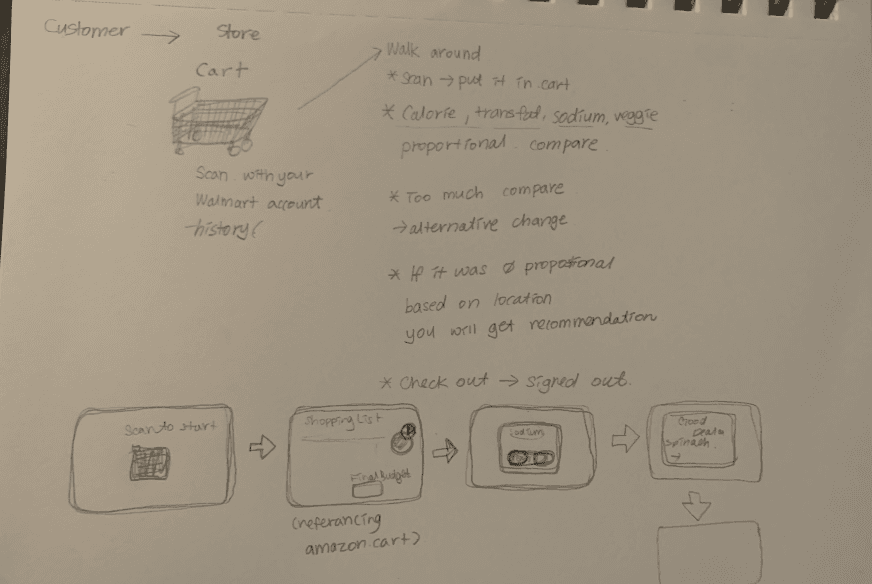
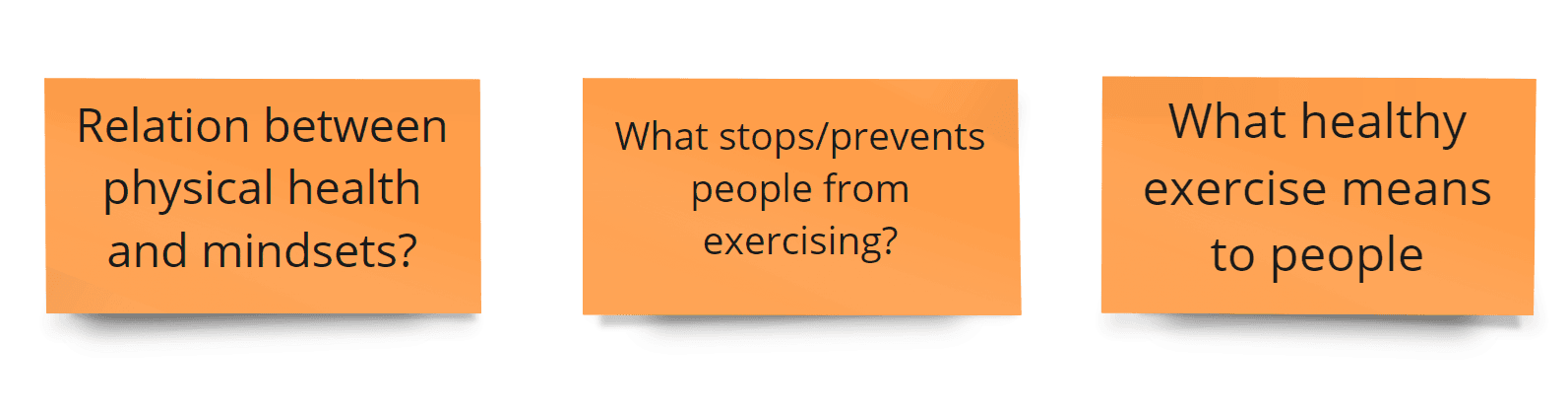
To better understand the design challenge, we conducted secondary research focusing on factors that influence healthy lifestyle adoption.
- Motivation
- Mindset
- Behavior nudging techniques
- Habit formation
Research
Understanding the Users
We focused on desk workers since they often face barriers to physical activity such as time, energy, and motivation.
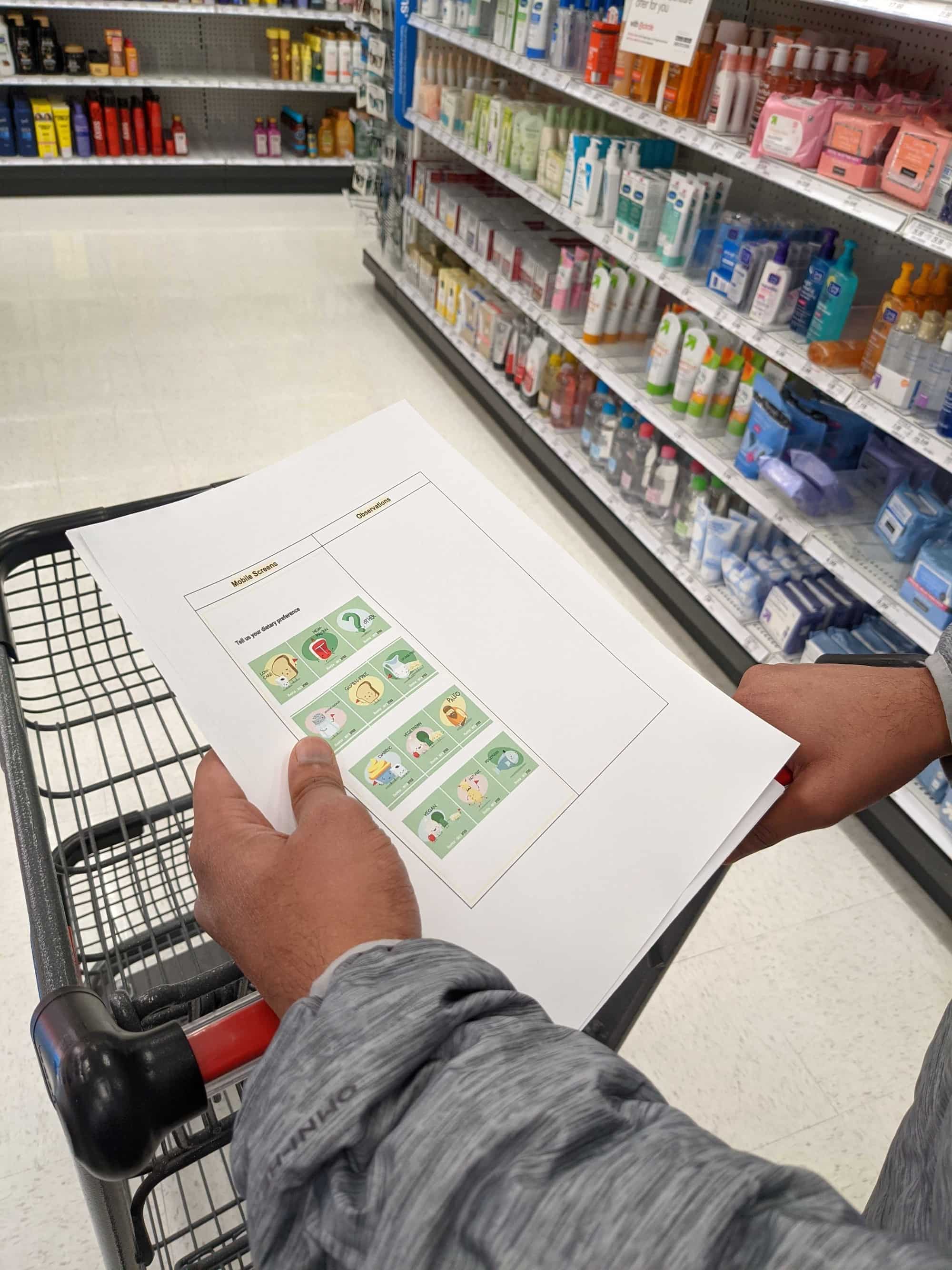
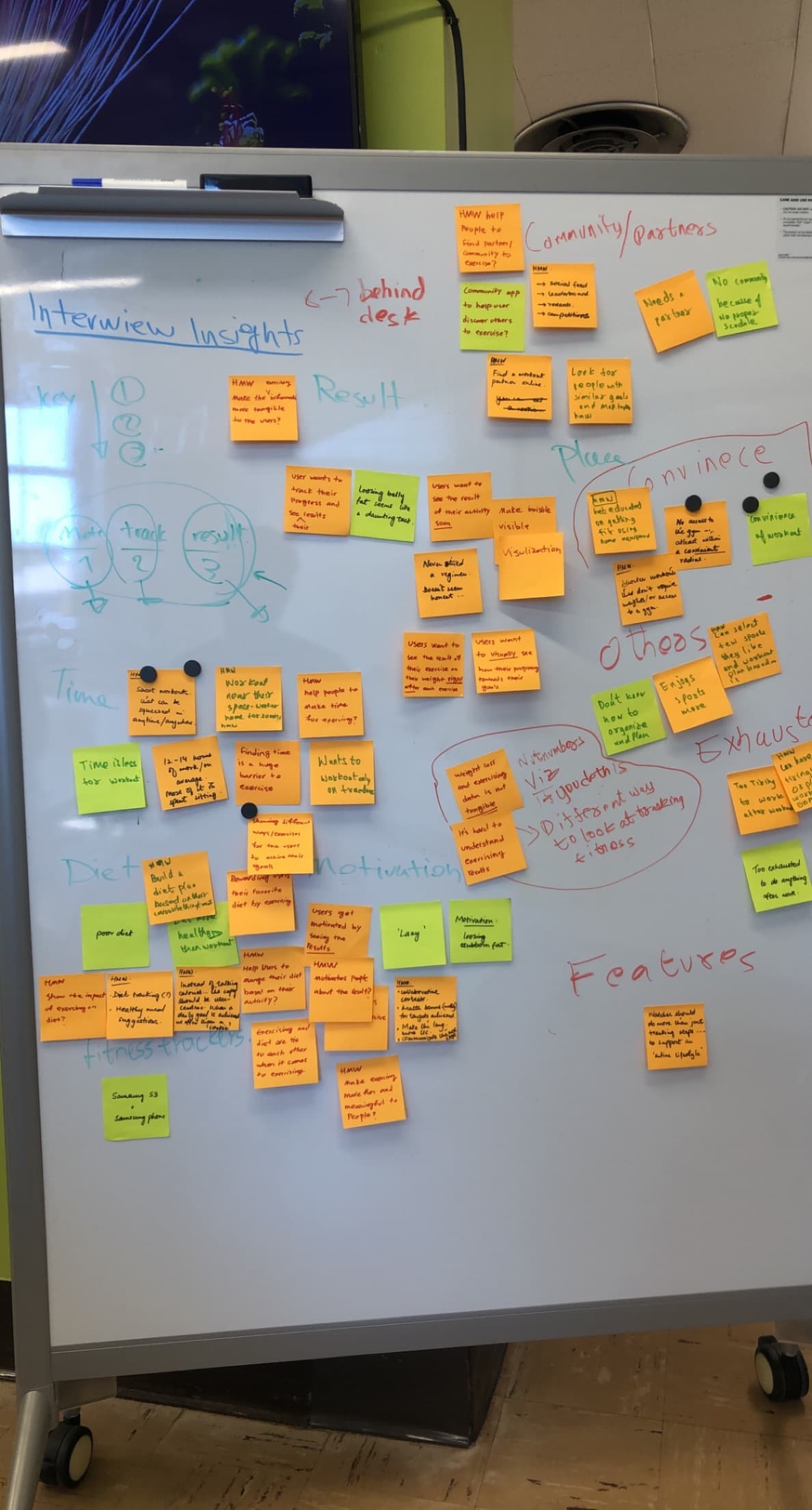
To validate our research, we interviewed six adults working full-time jobs to understand their routines and past relationships with exercise.
Synthesis
Affinity Mapping
We organized interview insights using affinity diagramming to identify patterns and user pain points.
Time constraints and environment emerged as the primary barriers preventing users from staying active.
Design
Ideation
Inspired by the concept of a 21-day habit challenge, we explored strategies that motivate users to build consistent habits through small daily exercises.
The concept eliminates barriers by designing activities that require no equipment and can be done anywhere.
Prototype
Application Concept
The application guides users through short daily exercises while rewarding progress with visual feedback.
A growing tree metaphor was introduced to represent progress and encourage consistent engagement.
Evaluation
Usability Testing
We conducted usability testing to evaluate whether the 21-day challenge concept motivated users to engage with the application.
The tests focused on clarity of instructions, navigation flow, and whether the reward system encouraged continued use.