
Client
Purdue × CGT
Project Type
User Experience Design
Project Year
2021
Role
UX Research, Interaction Design
How can we help young adult food gatekeepers living in food deserts make healthier food choices?
This project explores how the persuasive design of supermarkets influences unhealthy purchasing behaviors. By studying shopping habits and food accessibility challenges in food deserts, our team designed subtle behavioral nudges embedded into the grocery shopping experience to help users gradually adopt healthier dietary choices.
Problem Context
Supermarkets often promote inexpensive but less healthy food options through strategic store layouts, product placement, and promotional displays. These persuasive design strategies make it difficult for shoppers with already unhealthy dietary habits to transition toward healthier purchasing behaviors.
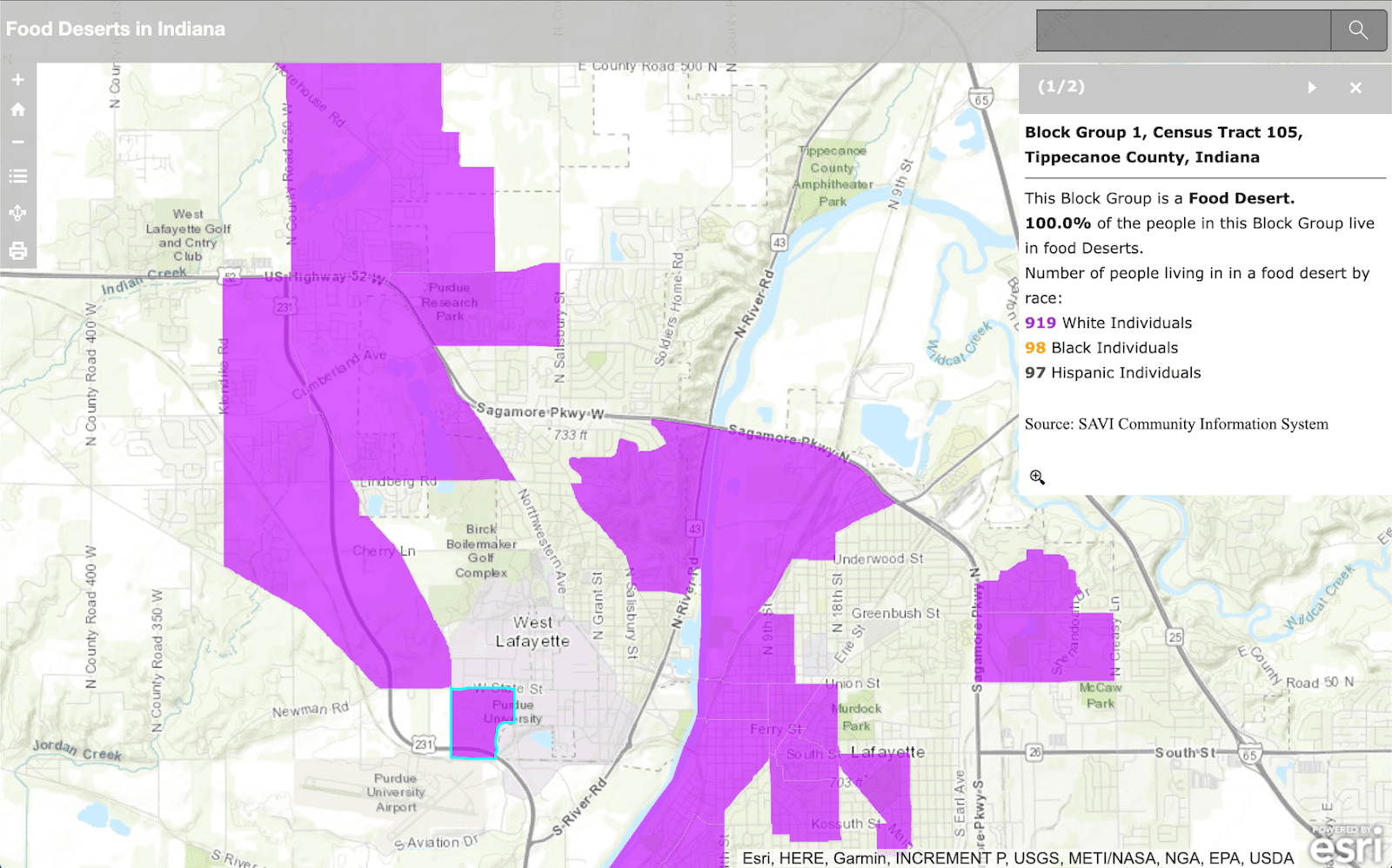
Experts suggest that living in a food desert may increase the risk of obesity, diabetes, and other weight-related conditions. Individuals in these areas may not have access to affordable fresh food and often rely on fast food, frozen meals, or highly processed snacks.
As a result, grocery shopping environments can unintentionally reinforce unhealthy dietary patterns rather than support healthier decision-making.
Behind the Scenes
Why Solve This Problem?
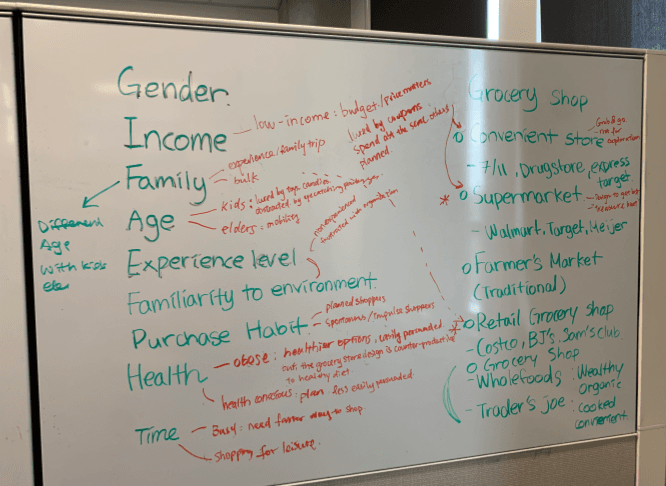
The initial problem framing revealed several possible areas of focus. To narrow our scope, we conducted a stakeholder analysis to identify groups most negatively affected by the current grocery shopping experience.
We evaluated stakeholders based on characteristics such as income level, age, family structure, mobility, familiarity with the store environment, purchasing habits, and health profiles.
Our analysis highlighted two particularly vulnerable groups: individuals at higher risk of diet-related health conditions and shoppers with mobility limitations who struggle to navigate large supermarket layouts.
Discovery
Understanding Grocery Shopping Behavior
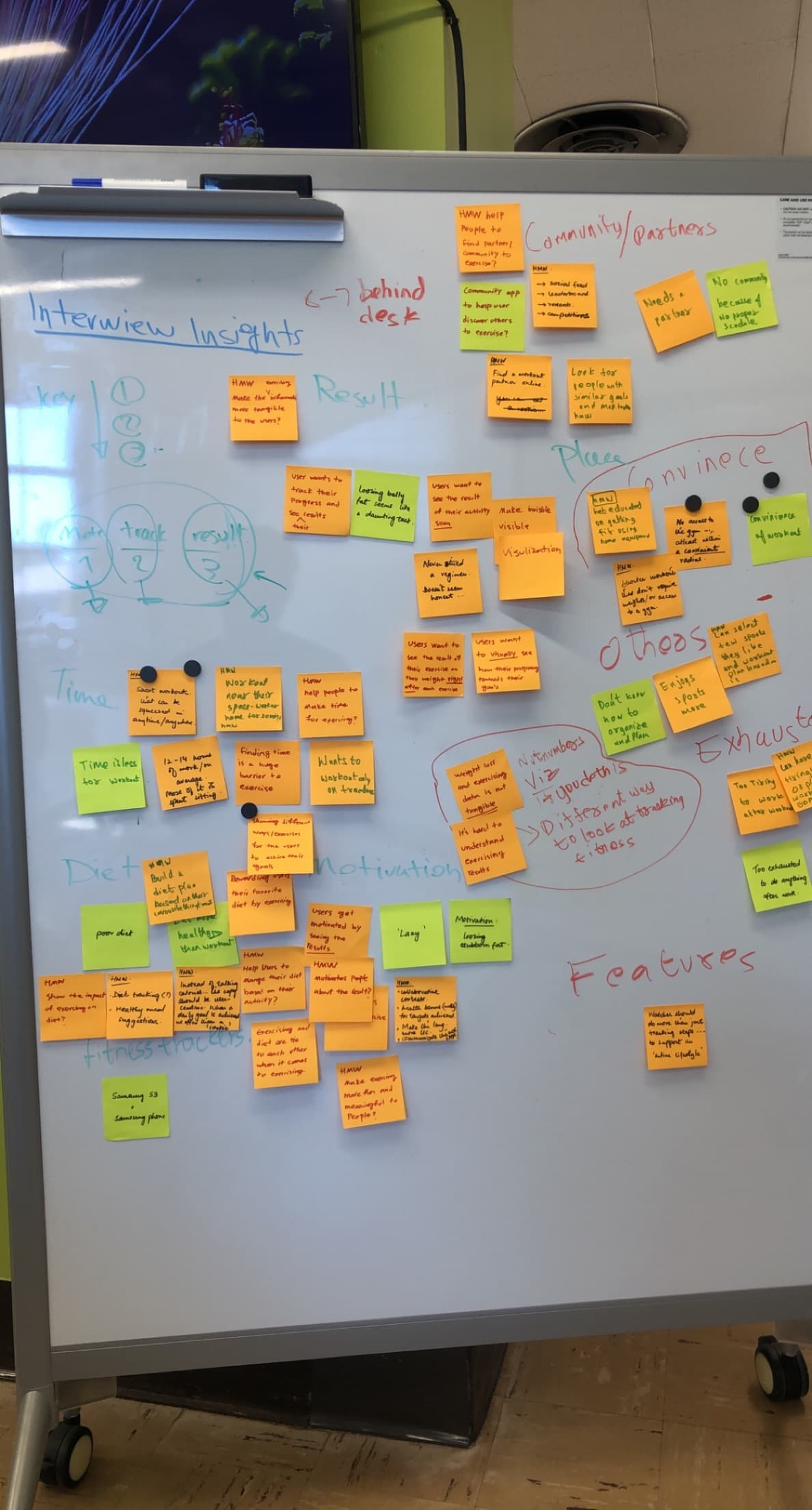
Through primary and secondary research, we identified several challenges that influence unhealthy grocery purchasing patterns.
Participants described grocery shopping habits that were deeply ingrained in their daily routines and difficult to change.
Additionally, healthy eating was often perceived as time-consuming, expensive, or inconvenient compared to quick processed food options.
Just-a-Little Nudge
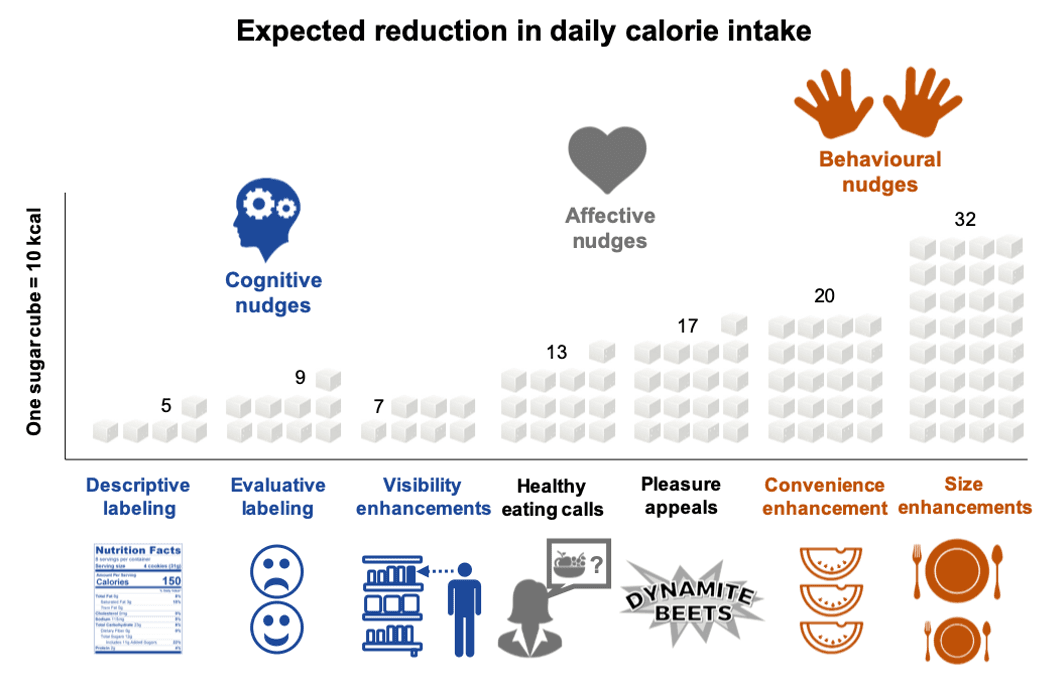
Rather than attempting to drastically change shopping behaviors, our approach focused on small behavioral nudges that gradually encourage healthier purchasing decisions.
Nudging is a behavioral design technique that influences decision-making without restricting user choice or using financial incentives.
Our design concept integrates subtle suggestions into the shopping experience by recommending healthier alternatives while shoppers build their grocery lists.
Design
Phase 1 — Proposed Design Intervention
During the ideation phase, our team explored multiple ways to introduce nudges into existing grocery shopping patterns.
After several brainstorming sessions, we focused on embedding these nudges directly into shopping carts, since carts are present throughout the entire shopping experience.
We investigated cognitive, affective, and behavioral nudging strategies commonly used in behavioral economics to promote healthier eating habits.
Phase 2 — Smart Grocery Shopping Experience
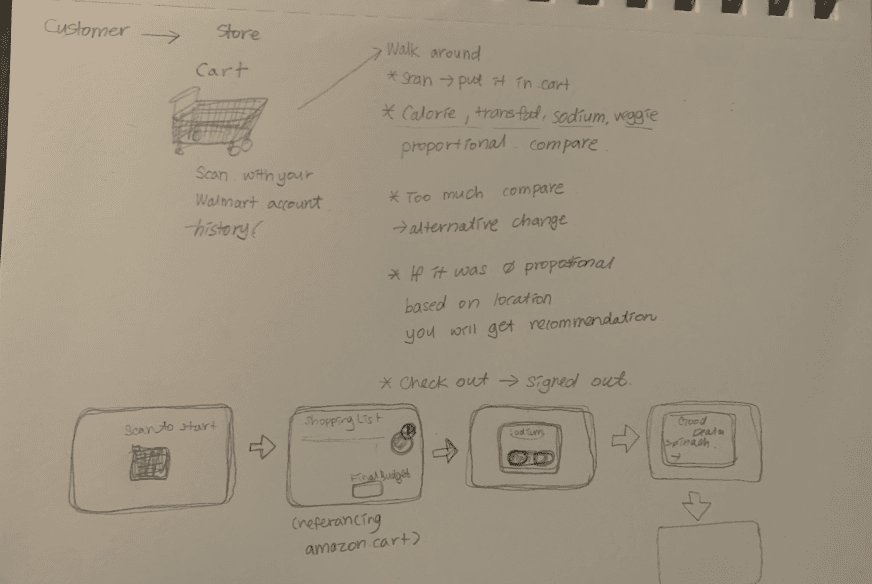
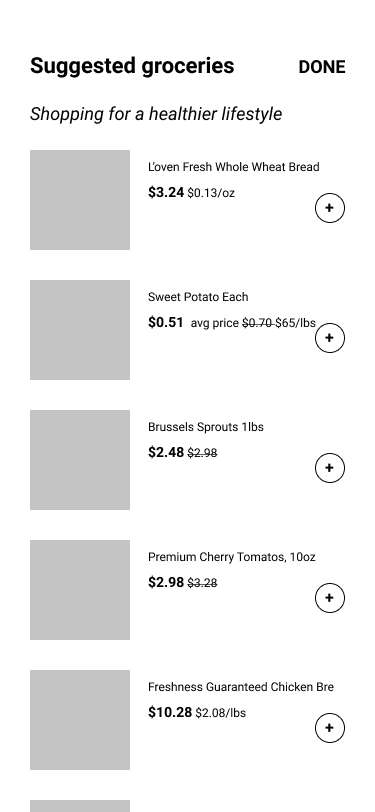
The concept introduces a smart shopping experience integrated with the existing Walmart mobile app and a digital grocery cart.
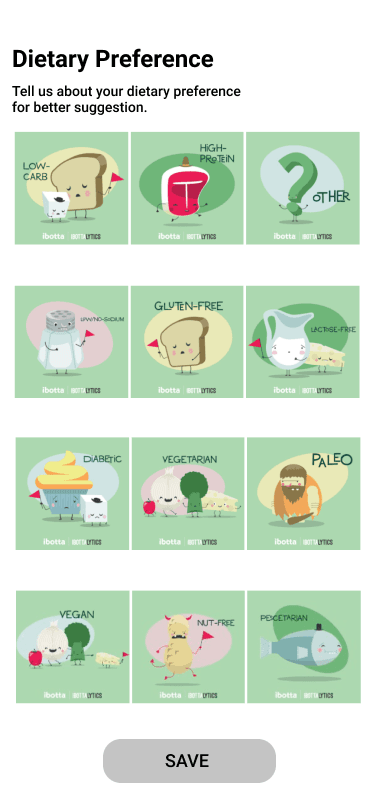
Users begin by planning their grocery list, where the application suggests healthier food alternatives based on dietary preferences.
As shoppers move through the store, the smart cart provides subtle nudges that highlight nearby healthy items related to the items already on the shopping list.
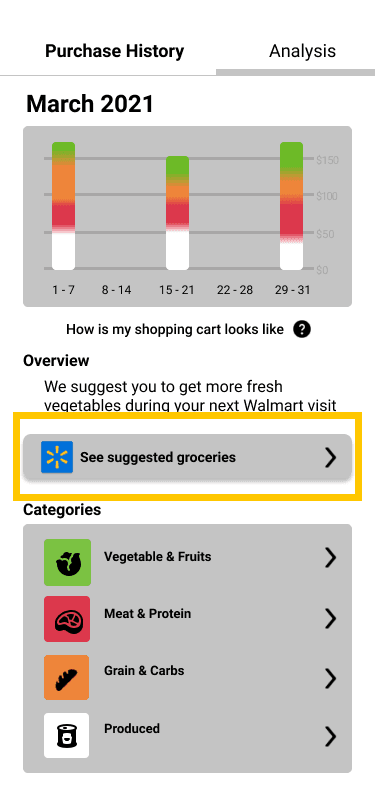
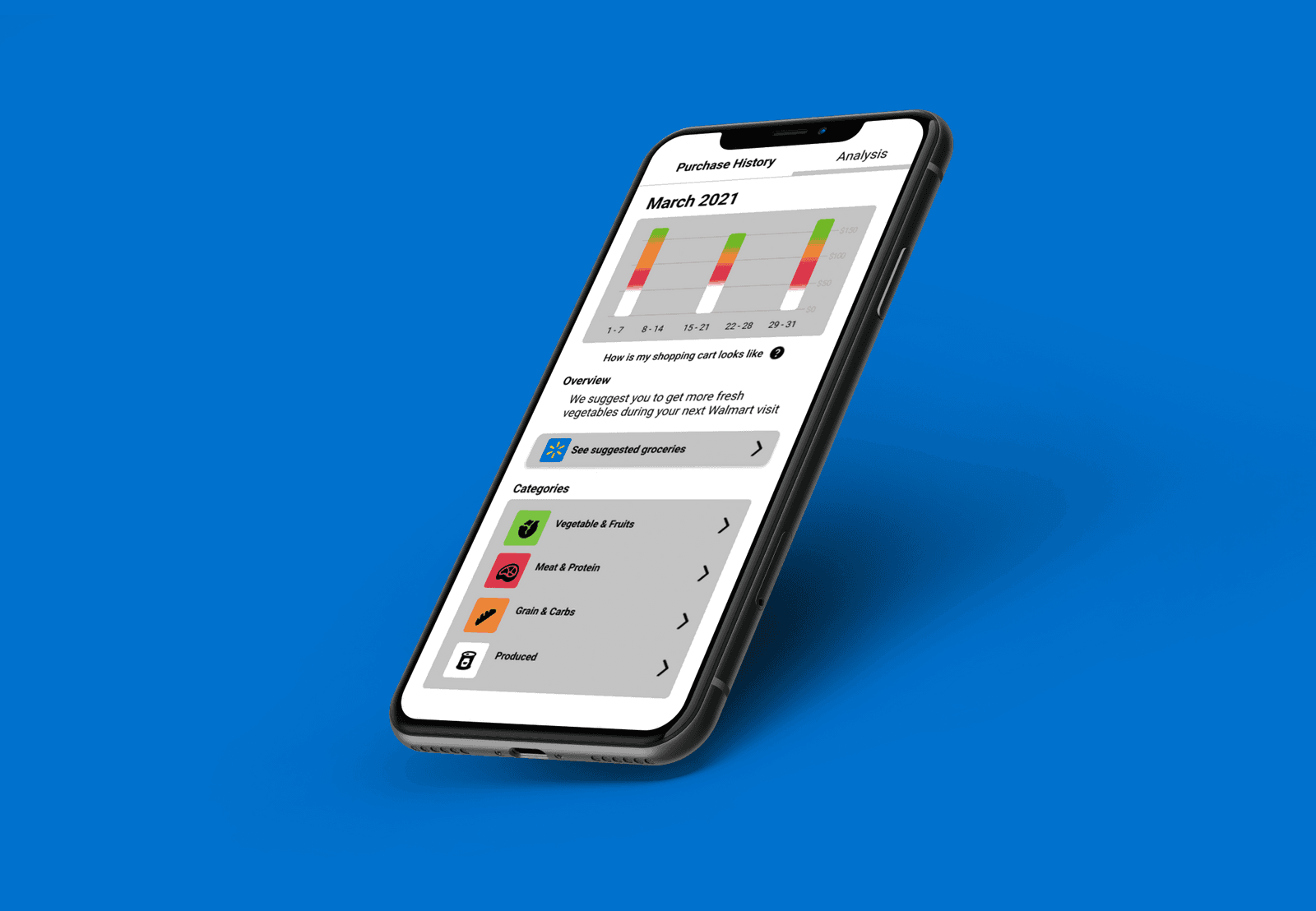
Tracking Healthy Dietary Progress
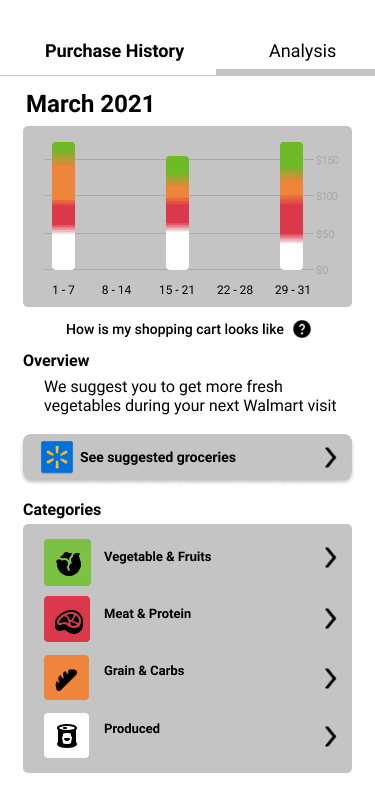
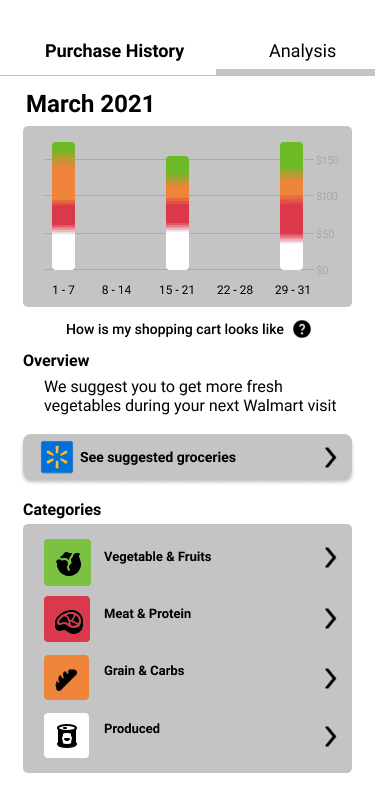
To reinforce behavioral change, the system provides visual feedback showing how users' grocery purchasing patterns evolve over time.
This dietary analysis dashboard allows shoppers to track progress toward healthier eating habits and better understand their purchasing behaviors.
Evaluation
Concept Testing
We conducted concept testing with two participants to evaluate the clarity of the task flow and users' willingness to adopt the nudging system.
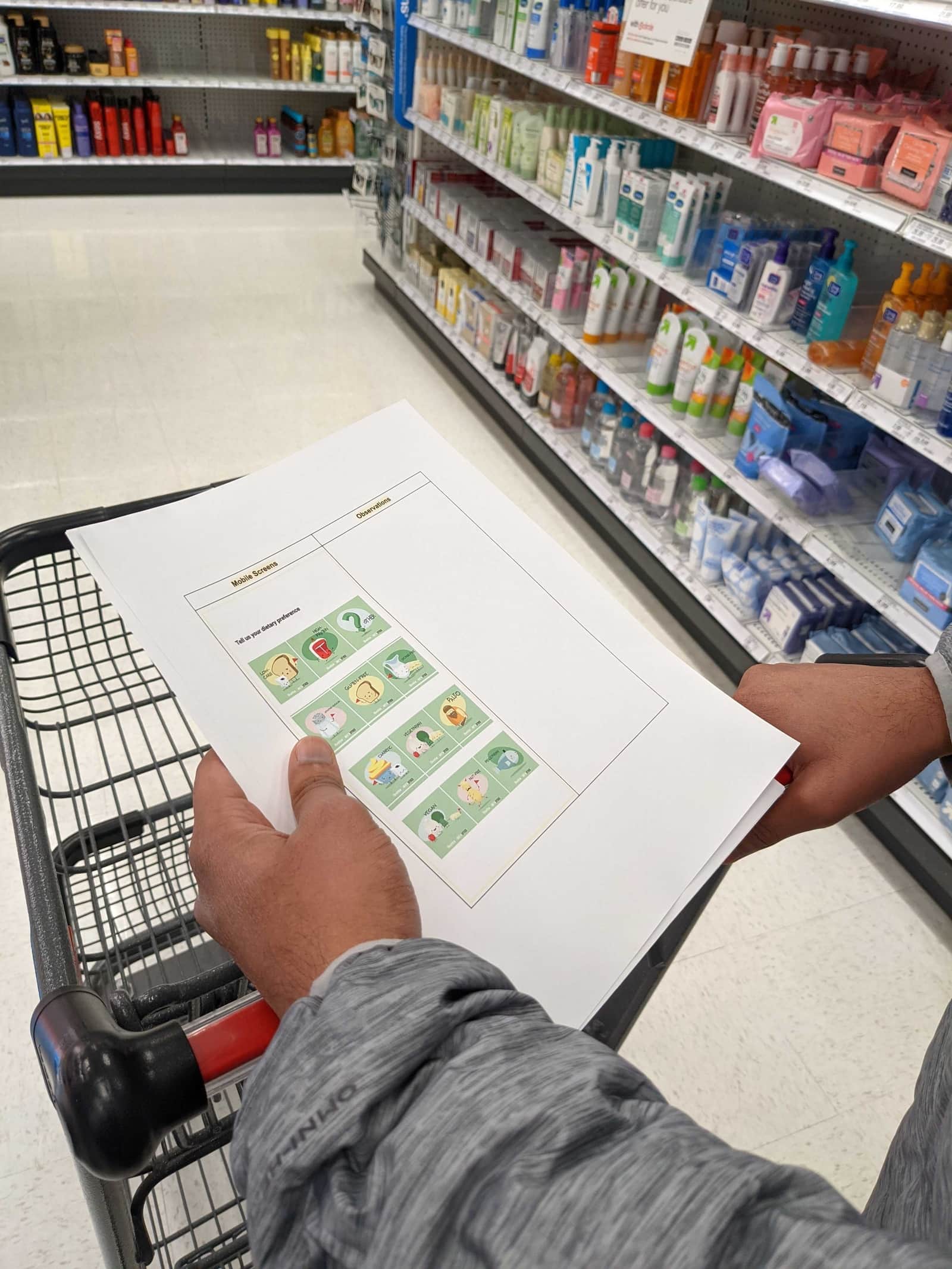
A second round of evaluation involved an in-store inquiry with a young adult shopper. During this session, the researcher simulated the smart cart experience using tablet mockups while suggesting healthy grocery options.
The goal was to observe how users reacted to real-time nudges while navigating a grocery store environment.
Design Limitations
Due to time and resource constraints, our project focused primarily on user welfare and behavior change rather than the feasibility of implementing the system within Walmart’s existing infrastructure.
While nudging appears promising for encouraging healthier grocery purchases, further research is needed to determine the optimal timing and frequency of nudges so they remain helpful rather than intrusive.
Future implementations would also need to carefully consider data privacy, as the system relies on access to users’ dietary preferences, purchasing history, and shopping patterns.